Introduction
There are a wide variety of teaching methods out there, each of which front-loads a slightly different priority. Some will focus on the aural aspect of music, encouraging students primarily to listen well, then play what they hear. Others emphasise the breadth and depth of the piano as an instrument, seeking for their students to be as comfortable as possible moving around all 88 keys.
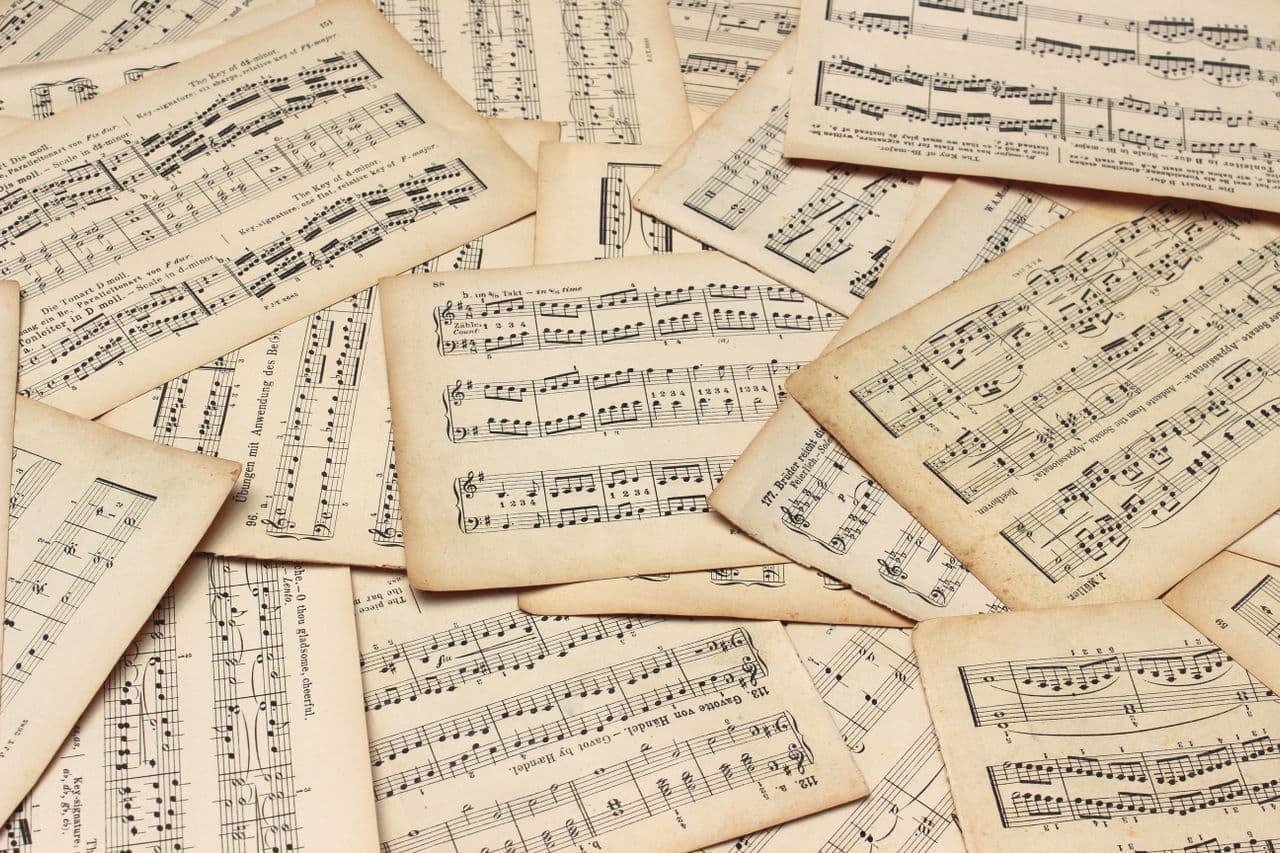
Others––and I will include myself in this category––take a keener interest in the sheet music itself, teaching their students to read it with aplomb.
I believe in, and can argue for, the necessity of all of the above methods in their place. Everything above represents a true need in piano playing. However, the one skill I focus on more than the others is indeed learning to read sheet music.
Why?
Recounting the Past
There is a common trope in literature and history in which the student, son, apprentice, or people do well while their superior is standing over them with a cane, insisting on disciplined progress. While ever Jimmy's exceptionally motivated mother insists that he practices, Jimmy practices. But take away her strong influence (as usually happens in Jimmy's heart somewhere around the ninth grade) and Jimmy's motivation to practice mysteriously vanishes. If Jimmy has no leader, how will he continue to progress?
The principle, I believe, is true: human beings do not act without some form of leadership, whether from a person, an emotion, or a conviction. I am led to write these articles, for example, because I love writing, I love music, and I believe the articles will be helpful for my students. But the point is that I am led into it. A man who leads his family well still does so at the behest of a conviction that he ought to do so.
This leads me (ironically) to a recounting of the past. I have seen it happen many times: a student is capable of playing piano so long as he has a teacher to tell him which notes to play, but the moment he is on his own, he flounders––his skills atrophy and he loses the love for piano because he cannot find the notes for himself without great effort.
Having seen this happen, I decided to promote one goal to the centre of my teaching style: I want to instil an enduring love for the craft of piano playing in my students. An enduring love for the craft requires an enduring ability to perform the craft for how can you love craft you no longer can... craft?
The tagline of Hunter Music Academy is
For a lifelong love of music
Learning to read music is an essential part of accomplishing this goal. Let me explain, in more detail, why that is.
My Teaching Method
Independence is paradoxically a trait found only in those who submit to something of greater importance than themselves. A man does not become an independent chess player by breaking the rules of chess, but by knowing the very limits of those rules like the back of his hand. Only then can he walk within them with a confident stride, forging his own path.
By the same token, we may never become independent musicians by casting aside every rule of music. To the contrary, it is precisely when we submit to those rules that we may explore music to the utmost. In short, a field of study must be respected for what it is before it can be in any way exhausted.
I approach music teaching with no illusion that I am the final authority. Indeed, on many occasions I explicitly give my students permission to respectfully push back if I say something unmusical. Sometimes I will intentionally say something like, "you need to hold this semibreve for all three of its beats" just to be sure the pupil is paying attention. I truly value a student's ability to treat the objective meaning of the sheet music as law.
In this way, I would liken the way I refer to the score to the way a pastor refers to the Bible. I am not the authority; the score is the authority and my job is to tell you what it says and how to read it.
Once a student has all the rules of music at his disposal, he can walk around in them––and even intelligently push at their boundaries if he'd like to be edgy.
Objections
Now, as far-fetched as it may seem, there are actually those who disagree with me. Two of their common objections are considered below.
1. Sight reading should be a lower priority
"There are so many more important thing to teach other than sight reading. You teach music, not literacy." (Hypothetical Critic A)
I actually agree there are many topics objectively more interesting, more important, more musical than learning to read the language of music. Indeed, learning to read music is not what turns you into a musician, just as learning to read words is not what turns you into an author. But my job is not to turn my students into musicians, for this, I believe, is an impossible task. The best I can do is expose my students to the music, teach them to play it, and have them become a musician themselves in the process.
A parent cannot eat food for their child, nor decide where the nutrients go once they enter the child's mouth; nor can I make my students assimilate musical taste and understanding. It is an organic process, a deeply human process, facilitated by the heart of the person themselves. The task, therefore, is to expose my students to musical food, teach them how to eat it, and trigger their hearts with musical thoughts and ideals.
2. Some people don't have the gift of sight-reading
"I've always believed some people are naturally gifted at sight-reading, and others tend more towards aural competency." (Hypothetical Critic B)
This may or may not be true. As with any claim of nature-versus-nurture, it is almost impossible to prove one way or the other, and those who have opinions on the subject tend to remain convinced no matter what evidence is brought to bear against their view.
That said, consider this point. Do we neglect to teach a child to read a novel because he prefers listening to audiobooks? Do we think that 'natural inclination' towards aural forms of reading ought to preclude the learning of textual forms?
Sheet music is no different. A child whose ear naturally inclines toward a tune, who is not so adept at matching said tune to the observance of black blobs fastened amidst a stave, does not by this inclination earn the right to change the way the world works. Learning to play music at any reasonable level of competence requires competence in sight reading; it cannot be achieved through aural mimicry alone.
Now, if we insist that every child, no matter his preference, learn to interpret black blobs on a page called "words", we ought to have no qualms insisting that every student of music learn to interpret black blobs on a page called "notes".
Conclusion
A teacher who merely teaches his student how to play Mary Had a Little Lamb has not thereby taught her to play Hot Cross Buns and Twinkle Twinkle Little Star as well. She has learned the skill of playing one piece. That is all. A teacher, on the other hand, who teaches his student the skill of learning to play Mary Had a Little Lamb has taught her to learn. She has a much greater skill at her disposal and may use it generally.
I believe the teaching style I have delineated is, therefore, worth far more than the exact time given to each student because it teaches students how to be their own teacher. Each lesson compounds in value as the student is granted a lifelong skill that will see them loving their craft well after they stop taking lessons.
Now, lest I cast myself as a one-trick pony, I should clarify that I am useful as a teacher beyond the realm of sight-reading. Once a student is competent in this art, he will still benefit from regular lessons. That is because I am also a musician; I can guide him in musical taste, musical interpretation, and musical expression.
A child cannot partake of the feast of playing music if he has not learned to eat. He may choose to eat the wrong things; but better, I say, that he know how to eat, then eat poorly, than to have had no opportunity either way.